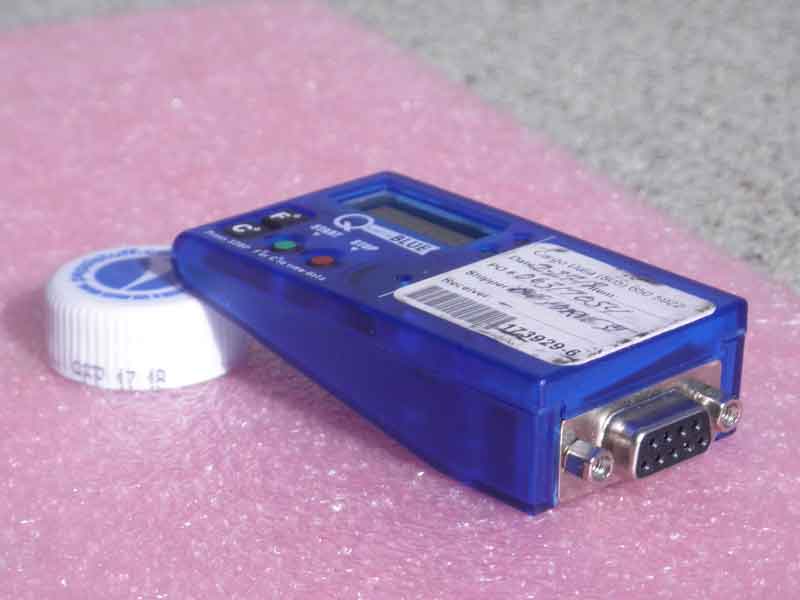
10.31 Temperature data logger, which is found on the street.

IIt's always interesting to take something a parts.
Actually, 'Quality Blue' is an ordinary, single-use, temperature data logger. This is done by "Cargo Data" or so, and more information you can find here. And it was alive and is still alive today. It shows the current temperature, pass internal test, and gives a message that the int. memory is full.
Of course, I will definitely return it, if I collect 10 of them (never happen). But for me it's interesting what's inside.

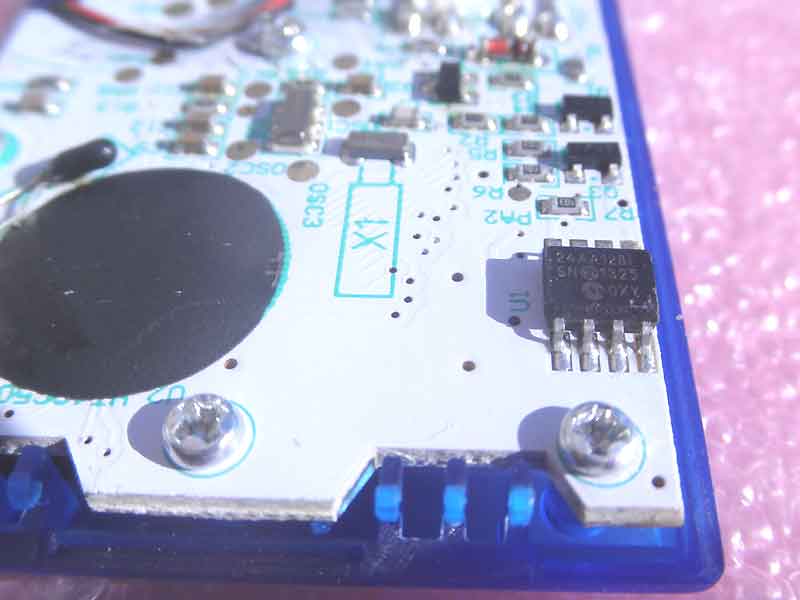
From the point of view of design, it is interesting that it has two temperature sensors. One you can see in the photo, and the second is under the board. Two crystals and I2C memory chip (24AA128) that can hold 128kbits.

The software is available for free and installed in two mouse clicks. And this is where the fun begins.

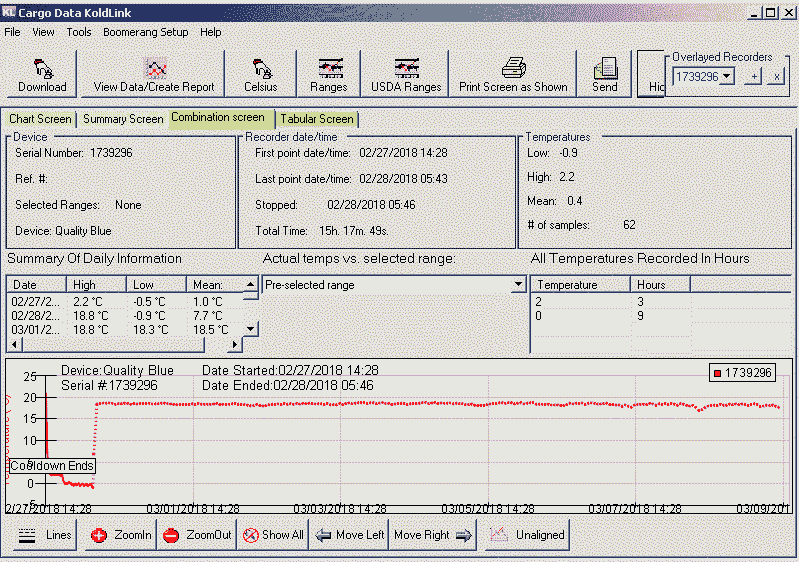
Immediately after the start, the data logger begins to record the temperature with an interval of 15 minutes. And this is not surprising. But when you press the 'Stop' button, it continues to record the temperature, but at a different interval, one per hour. And so on until all the memory is full.

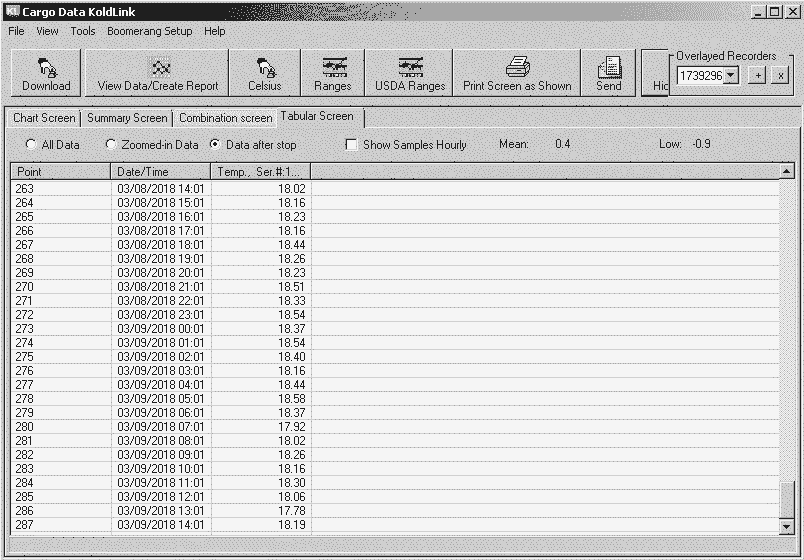
Regardless of the difference, we will only be interested in the fact that the maximum capacity of this device is 287 records. The program saves the same records (short & all) in the Excel format, which simplifies everything.
Actually it's all about this data logger. It works, which is not surprising at all. The next step is just for fun.
If I already have this device in my hands (useless at the moment), then I must read the contents of the memory. Just wondering what's there.
This is absolutely not a 'space' technology. It's very simple to do, if you know how. Of course, the chip will have to be removed from the data logger.

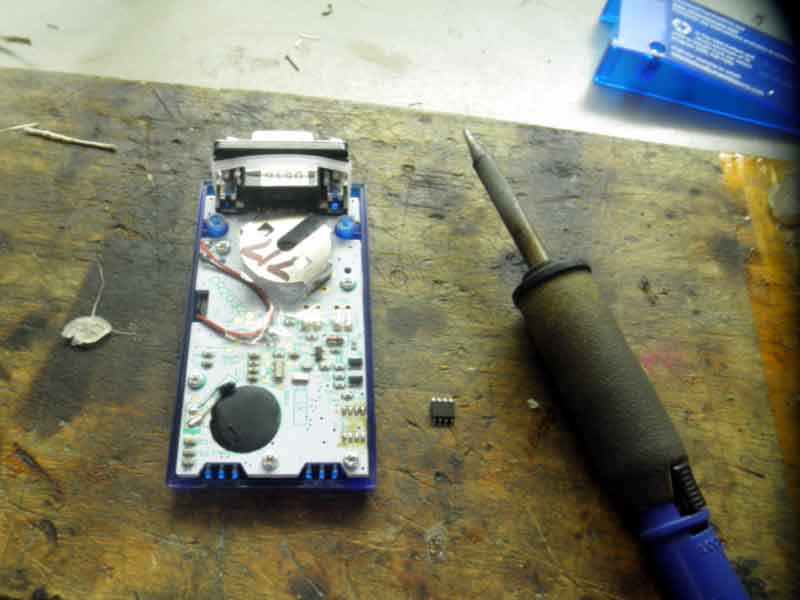
Next photos, just for reference, how it looks.

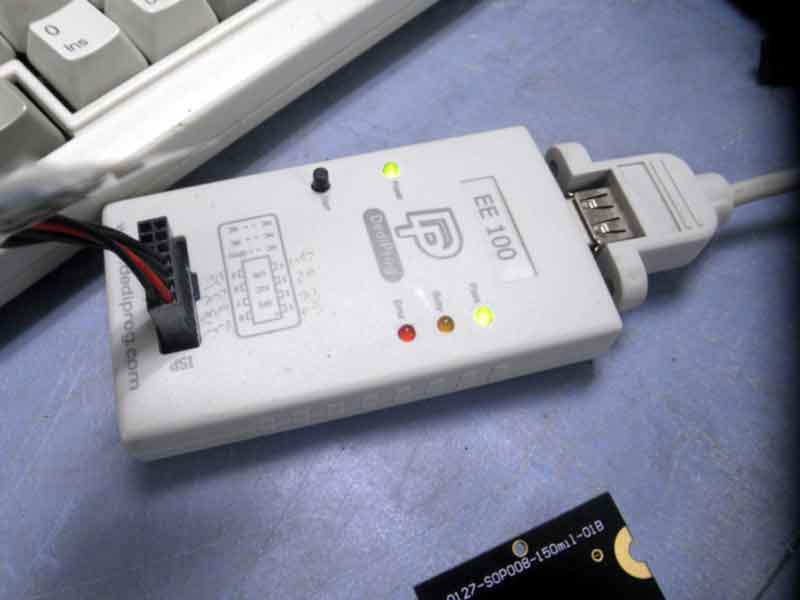
As a result, the contents of the memory (8kbytes) are dumped in two files, which you can take from 7z archive here. In general, 2 files are the same thing, only different file formats (.bin & .hex). Files can be viewed by any online editor. In my case, for .bin files - Online Hex Editor., for .hex - Notepad++. For me, Notepad++ works better. This requires knowledge of how the .hex format works (about .hex, short and useful).
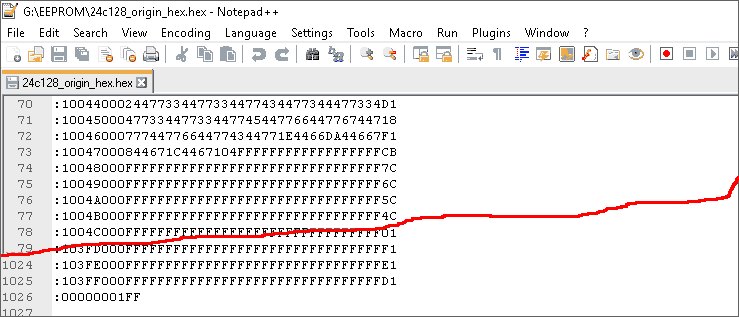
As we can see, most of EEPROM is empty. 73 lines by 16 bytes each = ~1.2kbytes of 16.
Running data logger on erased to FF memory - does not work. But it changes the serial number to 16161616 ... This means that each digit of the number is written in 4 bits and can be easily found. And it's true if you spend a little time.

Decoding the data recorded in the data logger is a more difficult task. It can be in any format, which was convenient for the programmer. And we will not do it. But, we will try to find out where these records are located and how they look.
First, that makes sense: we have 287 records, which, together with additional data (s/n, time, setup var.), occupy ~1200bytes. Like so, 1200 - 250 (add data) = 950 bytes / 287 records = ~3 bytes/record.
Second, the last record should be located at the end of the file and all of them should have a similar format (3 bytes in length, as we calculated earlier). & it looks, like:
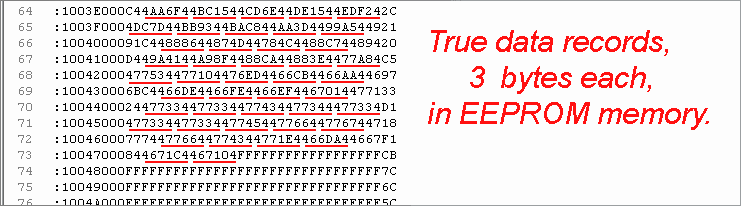
As I said, it's not easy to find out what kind of relationship between the 3 bytes of data and real temperature. The easiest way to find out is to replace 3 last bytes of data in EEPROM with '477774' and see how this affects the result. And we will do it, only later.
And if you already know the answer to the last question, then let me know. E-mail on the bottom.