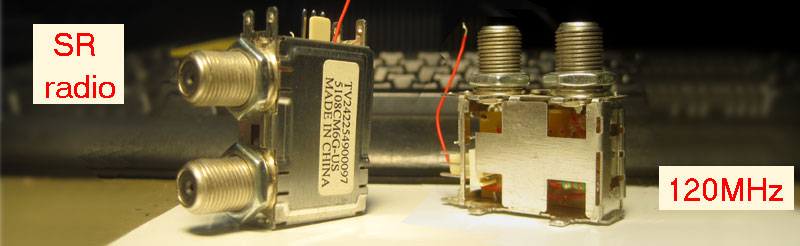
Same SR radio, with slightly different schematic.
3.1.8 Simplify and get it to run at 120 MHz.
Simplified from a schematic diagram that here.
This radio works well, capturing radio communications between airport ground services. You can change the frequency by changing L1 or C5. After that, C6 will be responsible for the sound quality.
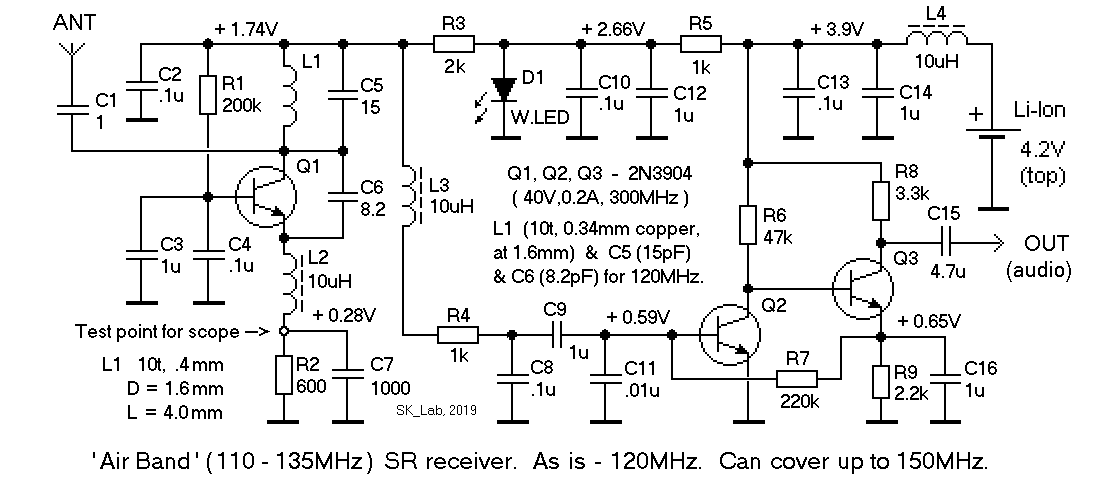 This is a simple regenerator, the schematic of which came from the 30s of the last century. In those days there were no RF transistors, so we follow the tradition. 2N3904 have a maximum frequency of 300MHz, but this does not prevent it from working.
 - The radio signal captures by everything that is on the left side of L3.
- * On resistor R3, we have almost an audio signal mixed with flashes of RF (Radio Frequency).
- L3 cuts off most of RF frequencies, and a low pass filter (R4,C8) cuts off anything higher than 10 kHz.
- Next is an audio amplifier with a large gain (~500 times), where C11 protects last against excitation.
- From C15, the audio signal is ready for any amplifier.
- Top right - power supply that makes a fixed voltage (+2,6Volts) to power the regenerator.
Departing from the traditions of the 30s, we build all on the SMD components. The dimensions of the board, according to the size of RF module, extracted from the old VCR. There are many reasons for this, one of which is that such a radio gives a lot of interference to others. The metal casing reduces this, slightly (what's better than nothing).
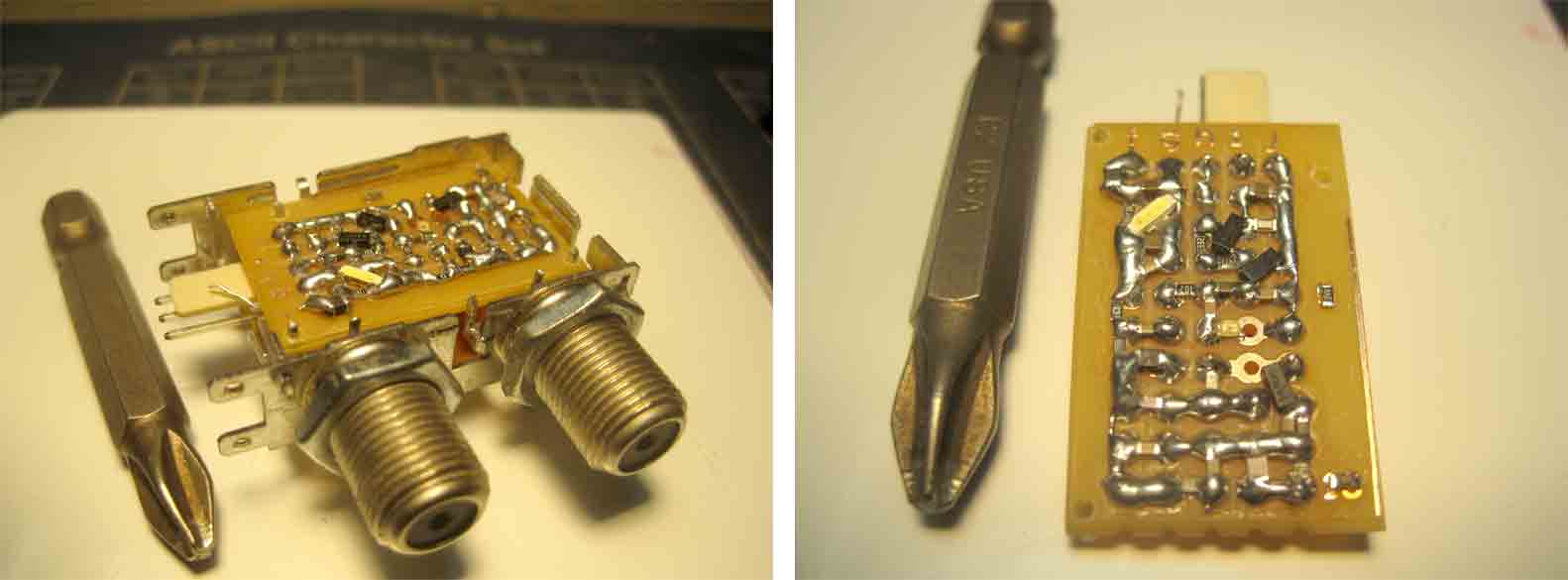
From the next picture (click to enlarge), we will be interested only in the geometric dimensions. Arrangement of elements is optional, because everyone does in their own way. But L1 is a critical element. The frequency of the received signal depends on it (& C5/C6, too). And there is nothing better than a picture showing a real coil (L1, for 120MHz), in a real radio.
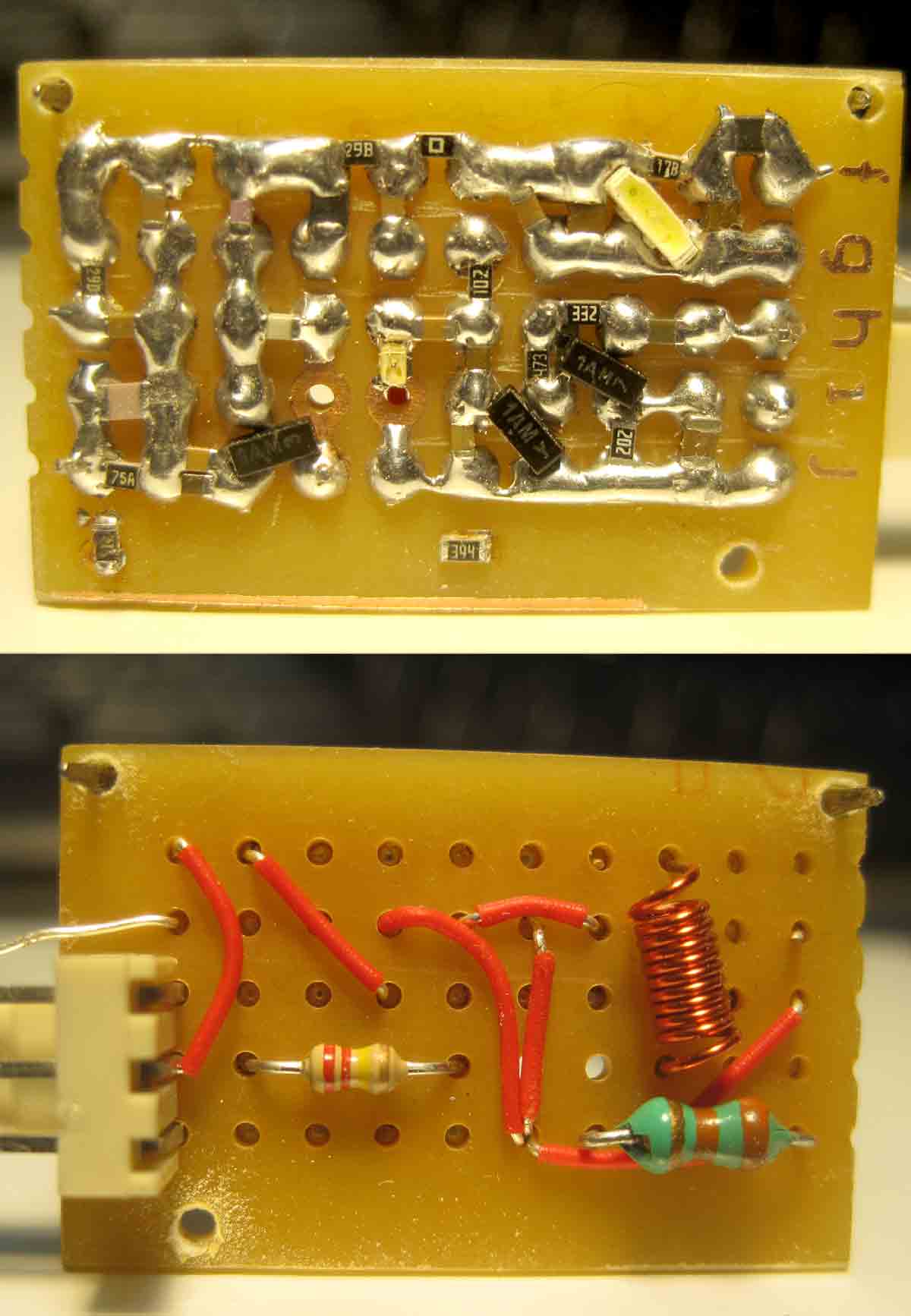
It was a good idea, and it works well.
Finally, you have more than enough information to make such a radio yourself. If we consider that according to Murphy's law, nothing works the first time, it is possible that 'waveforms at test points' will help you, as well as 'how this radio works and how to tune it'.
*** And if you have "something" to add or have questions, then my address below.